Flying · 7 min read
Flying With a Dog: What to Know Before You Book
From airline rules to carriers and airport preparation, start your trip with fewer surprises.
Booking a flight for yourself takes minutes. Booking one that includes your dog takes a little more homework — and most of that homework happens before you pay for anything.
Air travel with a dog is entirely doable, but it rewards planning. Airlines each write their own pet rules, airports each handle animals slightly differently, and countries each set their own entry requirements. The good news is that almost every unpleasant surprise happens at the same handful of points, and all of them can be checked in advance.
Start with the airline, not the fare
The cheapest itinerary is rarely the simplest one for a dog. Before comparing prices, narrow your options to the airlines that will actually carry your dog on that route, in the way you want them carried. Space for animals in the cabin is usually limited per flight, so a booking can technically exist while the pet space does not.
- Does this airline accept pets on this specific route and aircraft?
- Is there space remaining for an animal on the flight you want?
- What is the fee, and when is it paid?
- What are the maximum carrier dimensions and combined pet-plus-carrier weight?
- Are there breed, age or temperature restrictions that apply?
- How are connections and layovers handled?
Ask these questions by phone or in writing rather than relying on a summary page, and note the date you asked. Policies are updated frequently, and seasonal temperature embargoes can appear without much warning.
Cabin or cargo
Smaller dogs who fit comfortably in an under-seat carrier usually travel in the cabin. Larger dogs travel in the hold as checked baggage or as manifest cargo, depending on the airline and the route. Neither option is automatically right or wrong — the sensible approach is to weigh your dog's size, age, health and temperament, and to ask your veterinarian for advice specific to your dog before committing.
If your dog will travel in the hold, ask how animals are handled between check-in and loading, whether the hold is temperature controlled and pressurised, and what happens if a connection is missed. Direct flights remove a lot of variables.
Choosing and introducing the carrier
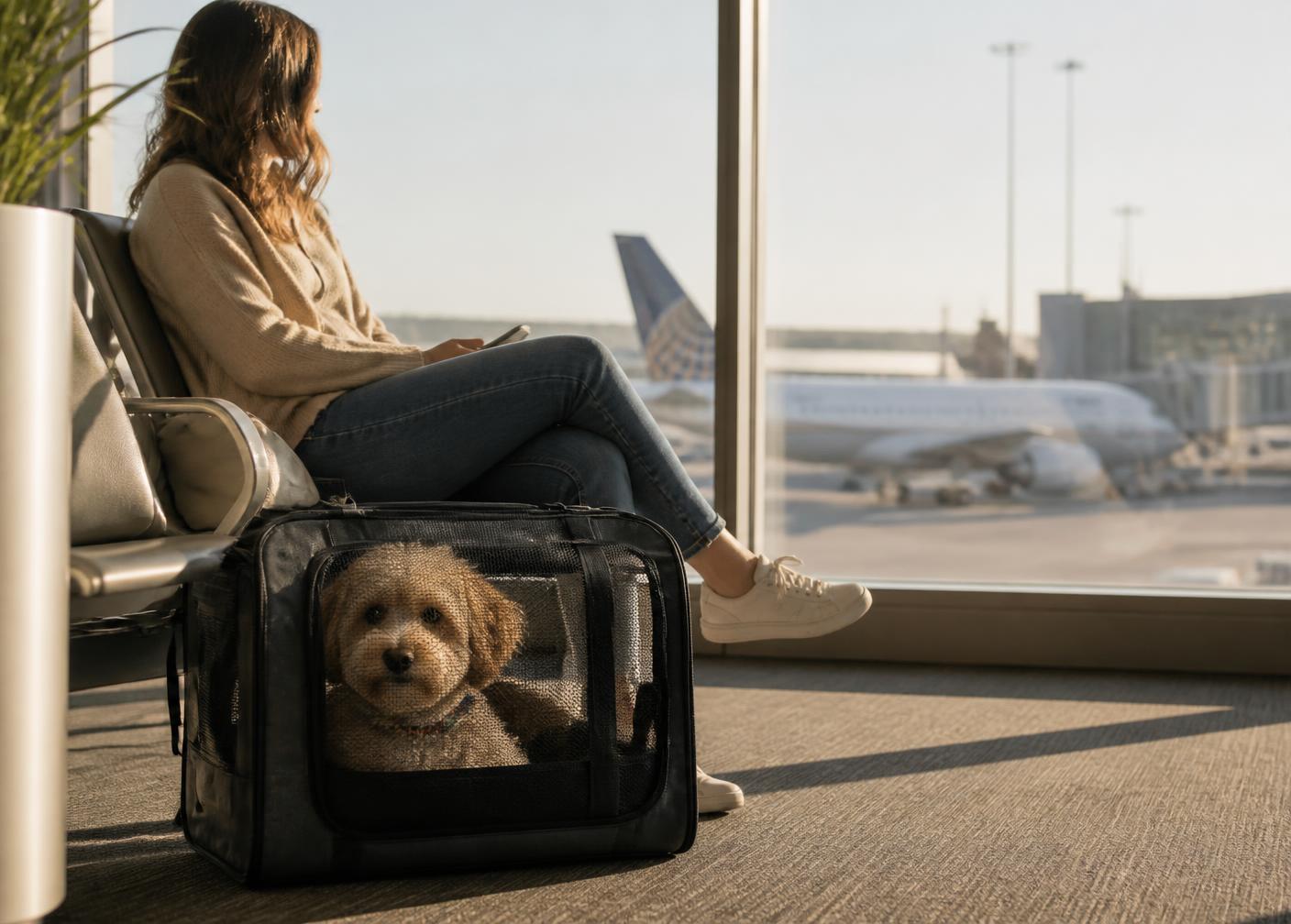
Buy the carrier early. A carrier that arrives the night before a flight is a carrier your dog has no reason to trust. Aim for something that meets the airline's stated dimensions with a little margin, that your dog can stand up and turn around in, and that has good ventilation and a secure closure.
- Leave the carrier open at home with a familiar blanket inside.
- Feed treats or meals near it, then inside it.
- Build up from short closed-door periods to longer ones.
- Take it on a few car trips so the carrier predicts going places, not being left.
Paperwork and health checks
Domestic flights may require little more than a healthy dog and a compliant carrier. International travel is a different exercise: microchipping, vaccinations, treatments and official certificates often need to be completed in a specific order and within specific time windows. Start this conversation with your veterinarian and the destination's government authority months rather than weeks ahead.
The day of the flight
Give your dog a proper walk before you leave for the airport so they arrive tired rather than restless. Keep the last meal light and well ahead of departure, but keep water available until close to check-in. Arrive earlier than you would alone — pet check-in is frequently handled at a desk rather than a kiosk.
- Attach ID tags and confirm microchip details are current.
- Carry a printed copy of every document, not just a phone photo.
- Pack a small kit in your hand luggage: collapsible bowl, wipes, waste bags, a spare absorbent liner and a familiar toy.
- Locate the airport's pet relief area before you clear security.
Landing well
Plan the first hour after arrival as carefully as the flight. Somewhere quiet to stretch, fresh water, a short walk and a calm route to your accommodation will do more for your dog than anything else. If your dog seems unwell or unusually distressed after travel, contact a local veterinarian rather than waiting to see how things go.
Flying with a dog is rarely as dramatic as it sounds in advance. It is mostly a series of small checks, done early, that leave nothing important to the morning of the trip.