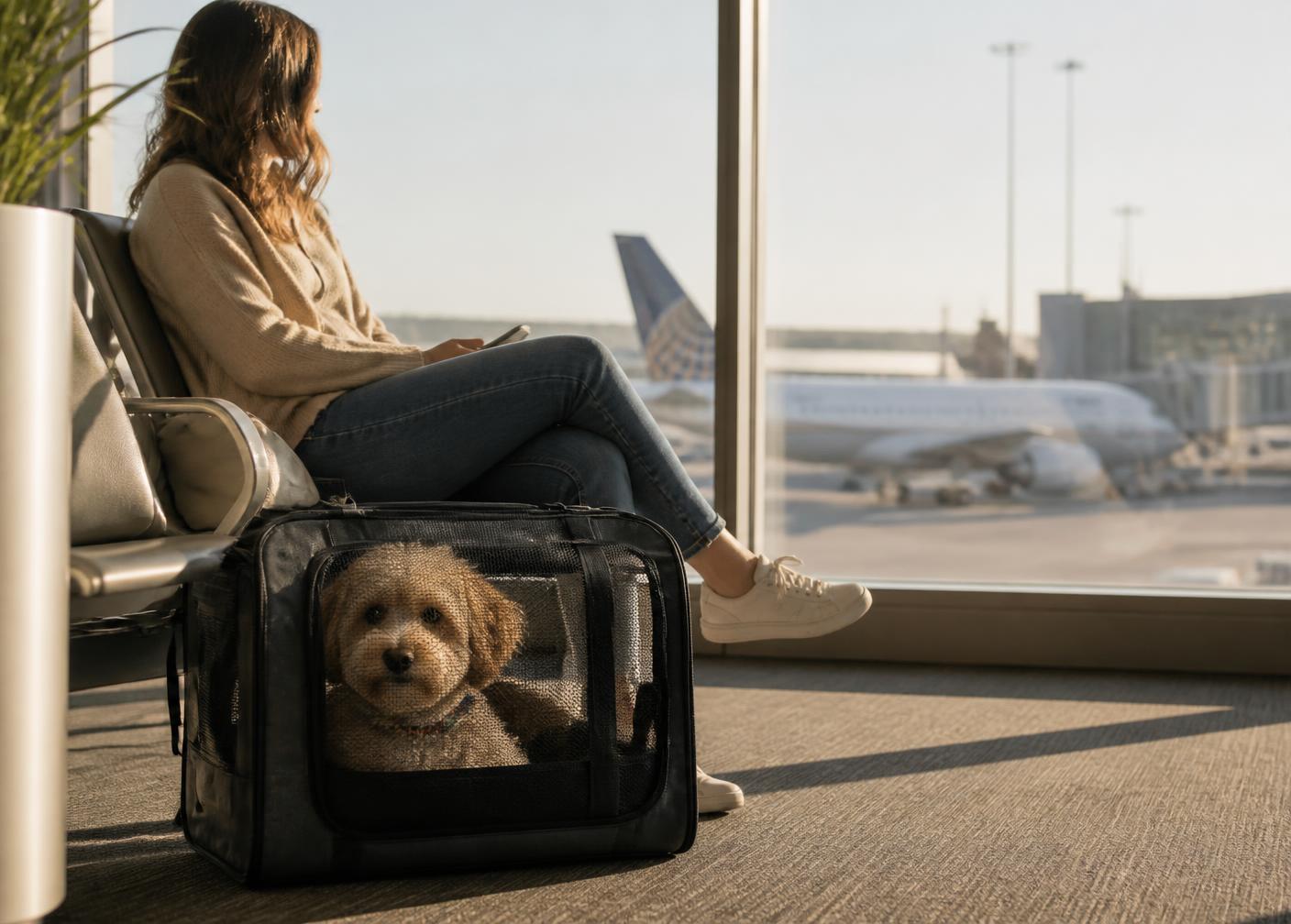
Flying with pets
Air travel with a pet requires a little more planning. Start here.
Before You Book
Check whether the airline carries pets on your specific route and aircraft, whether space remains on the flight, and what the fee covers. Pet spaces are limited per flight and are not held automatically when you book a seat. Direct flights remove connection risk, and a slightly more expensive itinerary is often the simpler one.
- Confirm pet space is available before paying for the fare.
- Ask about breed, age, size and temperature restrictions.
- Check the rules for connections, including changes of airline.
- Note the deadline for adding a pet to a booking.
Choosing a Carrier
Buy the carrier early so your pet has weeks, not hours, to get used to it. Airlines publish maximum dimensions for cabin carriers — measure carefully and leave a little margin. Your pet should be able to stand up, turn around and lie down comfortably.
- Meet the airline's stated dimensions, with margin.
- Good ventilation on multiple sides and a secure closure.
- An absorbent, removable liner and a spare.
- A label with your name, phone number and destination address.
Preparing for the Airport
Airports are loud, bright and crowded. Walk your pet properly beforehand, keep the last meal light and well ahead of departure, and allow extra time — pet check-in is often handled at a staffed desk rather than a kiosk.
- Arrive earlier than you would travelling alone.
- Locate the pet relief area before security.
- Carry printed copies of all documents.
- Keep a small kit in your hand luggage: bowl, wipes, waste bags, spare liner.
Cabin vs Cargo
Smaller pets who fit an under-seat carrier usually travel in the cabin. Larger animals travel in the hold as checked baggage or manifest cargo. Neither is automatically right — weigh your pet's size, age, health and temperament, and ask your veterinarian for advice specific to your animal before deciding.
- Ask how animals are handled between check-in and loading.
- Confirm the hold is temperature controlled and pressurised.
- Ask what happens to an animal if a connection is missed.
- Consider the season: temperature embargoes are common.
International Travel
Crossing borders is the most document-heavy part of pet travel. Microchipping, vaccinations, treatments and official health certificates often need completing in a specific order and within specific time windows. Some destinations also require permits or an approved entry point. Begin months rather than weeks ahead.
- Start with the destination country's government authority.
- Confirm which certificates need official endorsement, and when.
- Check requirements for returning home as well as arriving.
- Book the veterinary appointments the timeline depends on early.
Questions to Ask Your Airline
Ask these in writing where you can, and note the date of the answer.
- Is there pet space available on this exact flight?
- What are the maximum carrier dimensions and total weight?
- What is the fee and when is it charged?
- Are there breed, seasonal or route restrictions?
- What documents do you require at check-in?
- How are delays, diversions and missed connections handled?